Solar panel installation in London: solar PV, batteries and inverters
Solar PV panels, home battery storage and hybrid inverters, designed around your roof, your electricity use and your supply, then supplied, installed and commissioned as one turnkey service. For houses, flats, offices and commercial roofs in London, the Home Counties and across the UK.
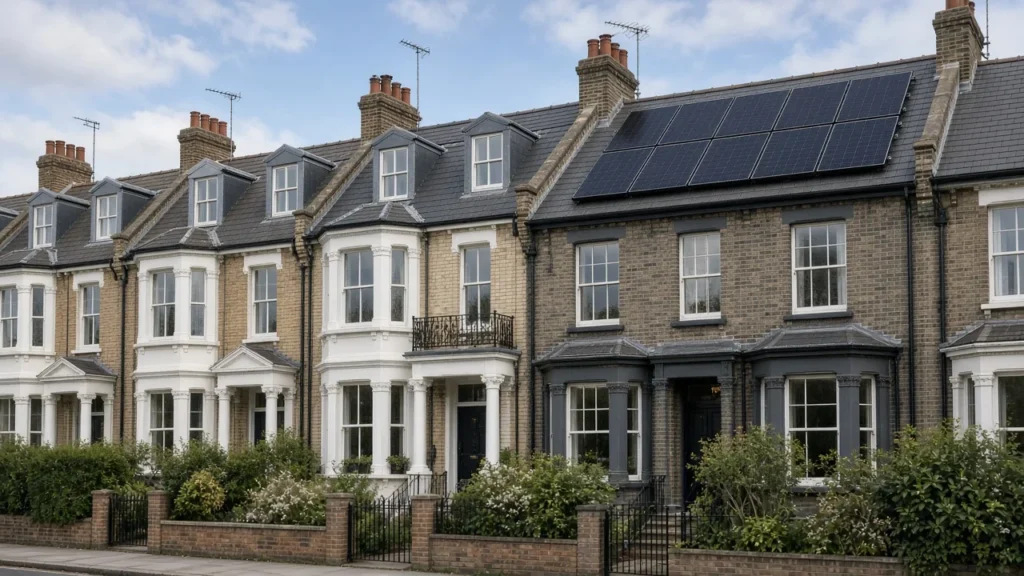
Solar PV designed as part of the electrical installation
Designed around the roof
Orientation, shading, roof structure and fixings checked before a panel layout is fixed. No standard packages.
Sized to how you use power
Panels, battery and inverter matched to your demand, any heat pump or EV charger, and the supply you have.
One turnkey service
Design, supply, installation and commissioning by one team, with one point of responsibility.
London & across the UK
London and the Home Counties, with larger and commercial projects elsewhere in the UK.
Solar PV, battery storage and inverters
From a single terraced house to a commercial roof, each part is designed with the electrical installation it connects to.
Solar PV arrays
Panel layout, string design and mounting for pitched and flat roofs, with in-roof and ground-mounted options where they suit.
Home battery storage
Battery capacity sized from your consumption, and sited with ventilation, access and clearances in mind.
Hybrid and string inverters
Inverter selection and siting, including hybrid inverters that run the solar panels and a battery from one unit.
Solar inverter replacement
Replacing a failed or ageing inverter on an existing system, often with a hybrid inverter that is ready for a battery.
Adding a battery to existing panels
Retrofitting home battery storage, either AC-coupled beside the existing inverter or through a new hybrid inverter.
Optimisers and shading
Optimisers or microinverters where chimneys, dormers or neighbouring buildings shade part of the array.
Consumer unit and earthing
Checks and upgrades to the consumer unit, protective devices, earthing and isolation, as part of the electrical design.
EV charging and heat pumps
Solar sized together with an EV charger or an air source heat pump installation, so the whole electrical load is considered.
Commercial solar panels in London
Roof-mounted arrays for offices, retail and education buildings, coordinated with roof plant, maintenance access and the building’s distribution.
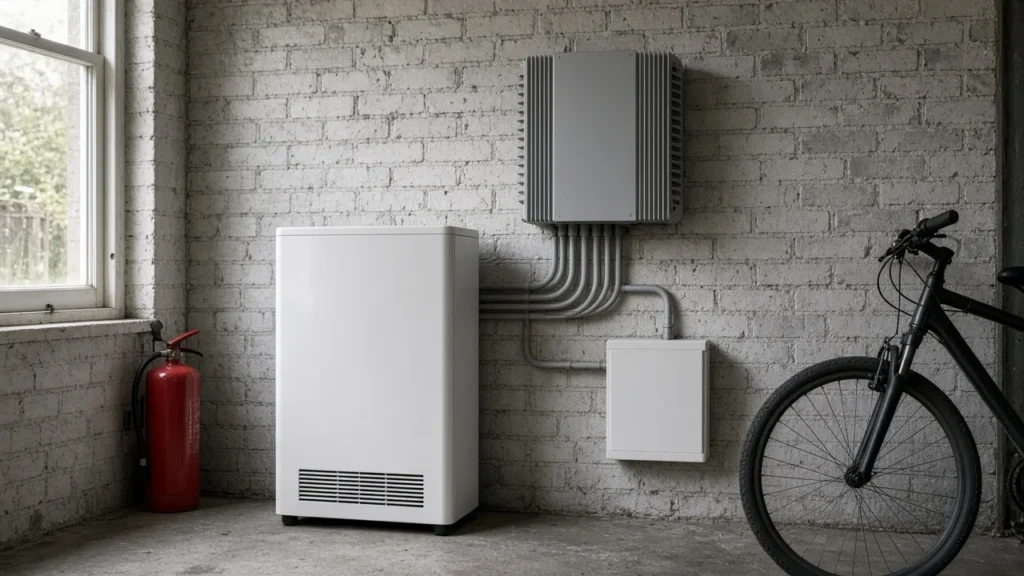
Solar panels with battery storage, sized to your home
A battery lets you use more of your own solar electricity in the evening, when you would otherwise draw power from the grid.
Most homes generate the most solar electricity in the middle of the day, when fewer people are at home to use it. A battery stores that daytime generation for the evening, when demand is highest. It can also charge from the grid on a time-of-use tariff, when electricity is cheaper.
The inverter is the part most likely to need replacing during the life of a system. Panels should last 25 years or more, while an inverter is expected to need replacing after around 12 years. When an old inverter fails, it is often the right moment to fit a hybrid inverter that can run a battery later.
- Battery capacity sized from your bills or half-hourly data
- AC-coupled or hybrid (DC-coupled) arrangement chosen to suit the existing system
- Battery siting with ventilation, access and clearances considered
- Backup circuits for essential loads where required
- Monitoring set up and explained at handover
What solar PV costs, and what changes the price
Every quotation is based on a survey and a design. These independent figures show typical ranges; your own figures depend on your roof, your use and your supply.
Typical system cost
Energy Saving Trust puts a typical home system at around 4.5kWp, roughly 12 panels on 20–30 m² of roof, costing around £7,600 installed.
Battery storage cost
Energy Saving Trust gives around £5,000 to £8,000 for home battery storage, depending mainly on capacity.
Roof orientation
An unshaded south-facing roof is ideal. Energy Saving Trust says east or west-facing systems typically generate around 15–20% less; north-facing roofs are not recommended.
Lifespan
Panels should last 25 years or more. Inverters are expected to need replacing after around 12 years, so we plan for inverter access and replacement.
Shading
Chimneys, dormers, trees and neighbouring buildings reduce output. Optimisers can limit the effect when only part of the array is shaded.
What changes the price
System size, roof access and scaffolding, roof type, panel choice, battery capacity, consumer unit work and any network operator application.
From roof survey to a commissioned system
Survey
Roof, structure, shading, consumer unit, earthing, cable routes and the battery location.
Design
Panel layout, generation estimate, string and inverter design, battery sizing and schematics.
Approvals
Network operator notification or application, and planning checks for listed buildings, conservation areas and flats.
Install
Scaffolding, mounting, panels, inverter, battery and electrical connection, by one team.
Commission
Testing, electrical certification, monitoring set-up and a handover pack.
Planning, network approval and Building Regulations
What has to be checked before solar panels go on a London roof.
Permitted development
Rooftop solar on houses usually does not need planning permission. The rules for England were revised on 27 August 2026, with separate limits for houses and blocks of flats.
Listed buildings and conservation areas
Listed buildings, conservation areas and national parks have extra limits. We check before the design is fixed.
Network operator (DNO)
Every system has to be registered with the network operator, which is UK Power Networks across London. Smaller systems are notified after installation; larger ones need approval first.
New homes and Part L
The new Part L brings a requirement for renewable electricity generation on new homes. Read our Part L building regulations update.
Solar for hot water?
If you mainly want to heat water from the sun, see solar thermal installation with evacuated tube collectors.
Electrical design to BS 7671
Cable sizing, isolation, protection and labelling are designed as part of the electrical design and installation.
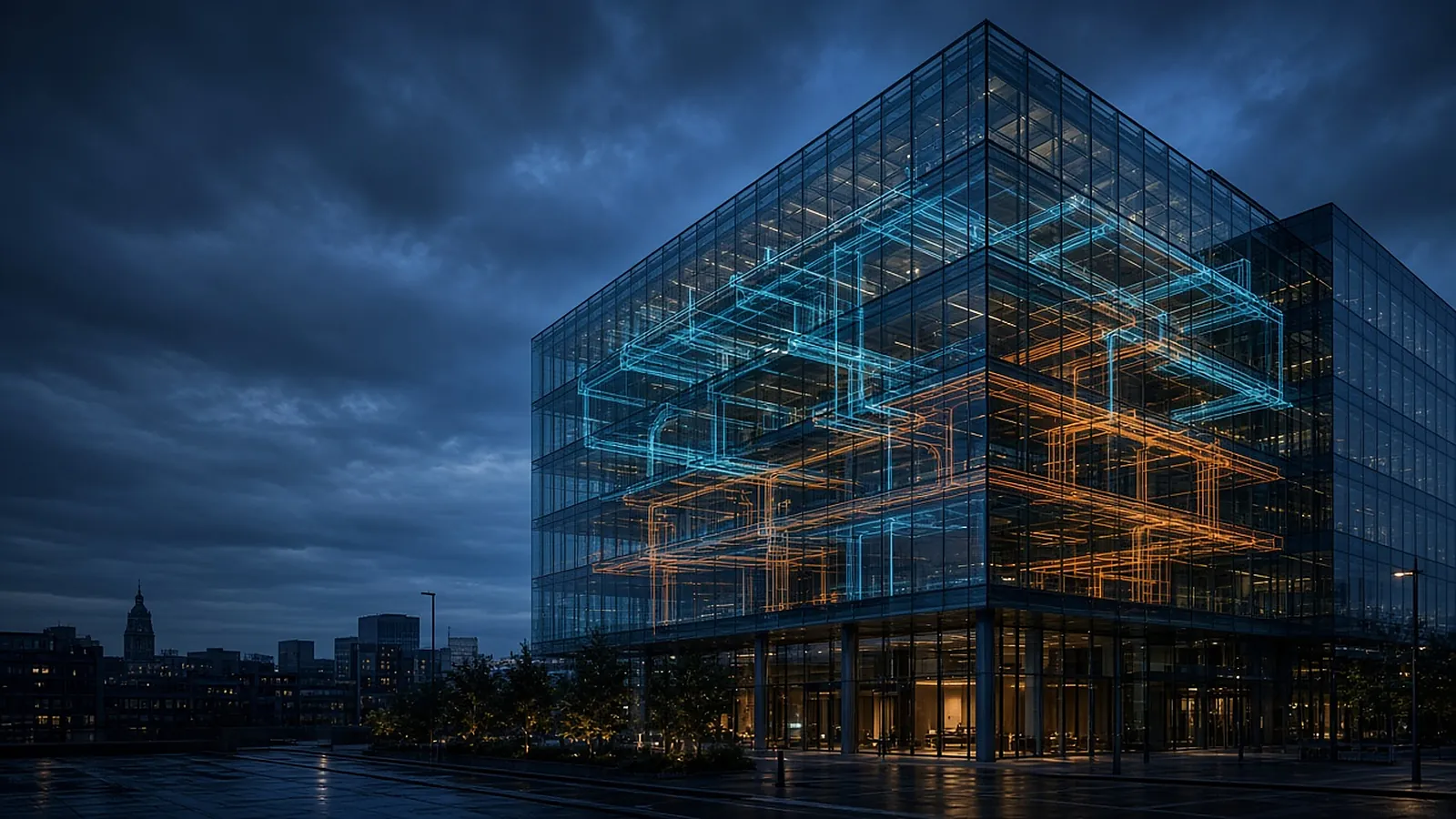
Solar PV with electrical, heating and BIM
Solar connects to the consumer unit, the meter, EV chargers, heat pumps and the roof. We design and install it as part of the electrical installation, and model it in Revit on larger projects.
Related pages
Sectors
Solar PV questions
How much does solar panel installation cost in London?
It depends on the size of the system, roof access, scaffolding and whether you add a battery. As an independent reference, Energy Saving Trust puts a typical 4.5kWp home system at around £7,600 and battery storage at around £5,000 to £8,000. We price each project from a survey and a design.
Do I need planning permission for solar panels?
Usually not for a house: rooftop solar is normally permitted development. Listed buildings, conservation areas, national parks and blocks of flats have extra limits, and the rules for England changed on 27 August 2026. We check this before the design is fixed.
Is a home battery worth it?
A battery helps most when you generate more than you use during the day and draw power from the grid in the evening, or when you use a time-of-use tariff. We size it from your actual consumption and tell you if a battery is unlikely to pay its way.
Can you add a battery to my existing solar panels?
Usually, yes. Depending on the existing inverter, the battery is either AC-coupled alongside it or connected through a new hybrid inverter.
When should a solar inverter be replaced?
Inverters are expected to need replacing after around 12 years, or sooner if they fail. Replacement is a good moment to fit a hybrid inverter that is ready for a battery.
Do solar panels work on east or west-facing roofs?
Yes. An unshaded south-facing roof is ideal, but Energy Saving Trust says east or west-facing systems typically generate around 15–20% less. North-facing roofs are not recommended.
How long do solar panels last?
Panels should last 25 years or more. The inverter is expected to need replacing after around 12 years, so we design for easy access to it.
Do you install commercial solar panels in London?
Yes. We design and install roof-mounted arrays for offices, retail, education and mixed-use buildings, coordinated with roof plant, access and the building’s electrical distribution.
Do you work outside London?
Yes. We cover London and the Home Counties, and larger projects across the UK.
Planning solar panels, a battery or a new inverter?
Call us, or leave your phone number and an engineer will call you back to talk through your roof, your electricity use and what you want the system to do.
- London, the Home Counties and UK-wide projects
- Design, supply, installation and commissioning as one turnkey service
- Revit, IFC and Navisworks deliverables