Solar thermal panels and evacuated tube solar hot water systems
Solar thermal installation for homes and commercial buildings: solar thermal panels and evacuated tube collectors that heat your hot water from the sun, designed with the cylinder, the boiler or heat pump and the controls, then supplied, installed and commissioned as one turnkey service in London, the Home Counties and across the UK.
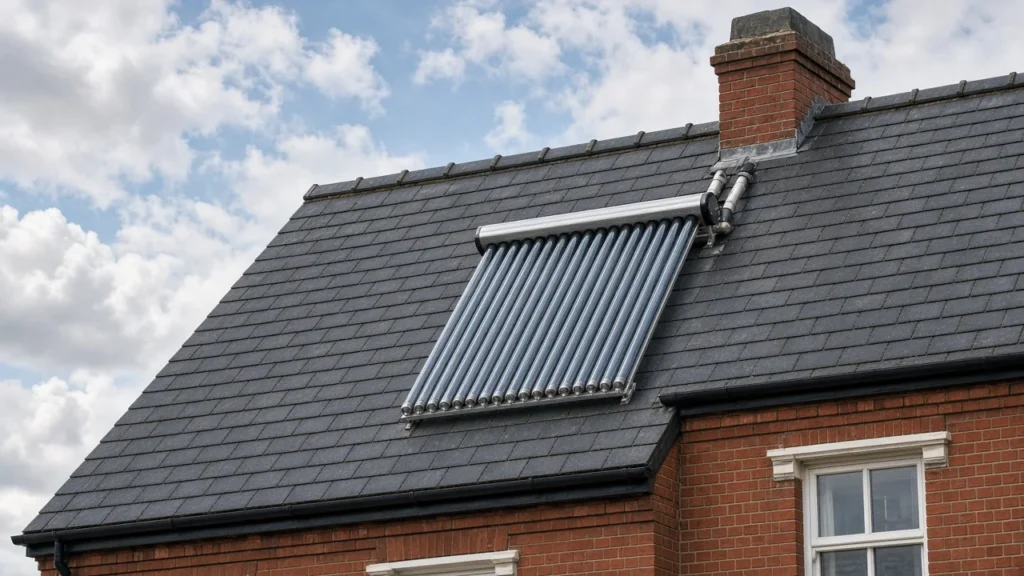
Solar hot water designed with the heating system
Designed with the cylinder
Collector area, cylinder volume and coil arrangement sized together from your hot water demand.
Works with boilers and heat pumps
The sun pre-heats the water; a boiler, heat pump or immersion heater tops it up.
One turnkey service
Design, supply, installation and commissioning by one heating team.
London & across the UK
London and the Home Counties, with larger projects elsewhere in the UK.
Solar thermal systems for homes and commercial buildings
From a family home to hotels, care homes and sports buildings with a high hot water demand.
Evacuated tube solar collectors
Rows of vacuum glass tubes that lose little heat. Useful where roof space is limited and in cooler weather.
Flat plate solar thermal panels
On-roof or in-roof panels with a slimmer profile, where roof area and appearance favour them.
Solar hot water cylinders
Twin-coil or dedicated pre-heat cylinders, including unvented cylinders, sized with the collectors.
Pump stations and controls
Pump station, differential controller, sensors and expansion vessel, set up for safe and efficient running.
Solar thermal with a heat pump
Solar thermal alongside an air source heat pump installation, so each does the part of the job it is best at.
Support for space heating
Larger arrays with a thermal store can contribute to space heating in spring and autumn, where the building suits it.
Stagnation and overheating
Designed for hot days with no hot water draw: expansion sizing, heat dumps or drain-back where appropriate.
Safe hot water temperatures
Stored water controlled to safe temperatures, with anti-scald mixing where it is needed.
Existing systems
Fault-finding, refilling and replacing the heat transfer fluid on existing solar thermal systems.
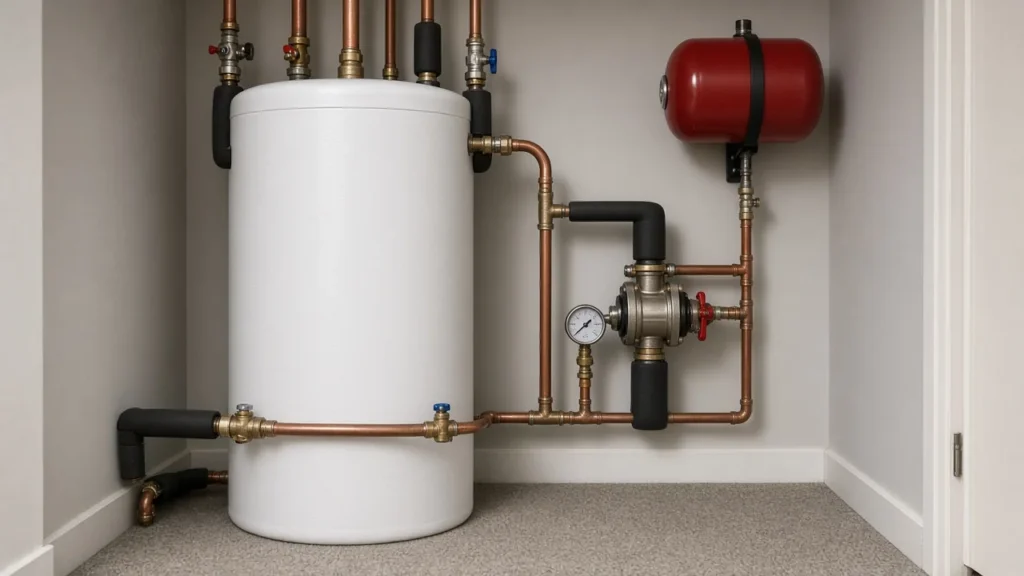
A solar hot water system is only as good as its cylinder
The collector on the roof is the visible part. Most of the design work is in the cylinder, the pipe run and the controls.
Energy Saving Trust guidance is that a solar water heating system normally provides roughly half of a home’s hot water over a year: around 90% in summer, falling to around 25% in winter. A boiler, heat pump or immersion heater makes up the rest, so the cylinder needs a solar coil low down and a second heat source higher up.
With a combi boiler, solar thermal usually means adding a hot water cylinder, and often changing the boiler or moving to a heat pump. We check this at survey, along with the space for a larger cylinder and the route for insulated pipework from the roof.
- Hot water demand and collector sizing
- Twin-coil or pre-heat cylinder selection and siting
- Insulated flow and return routes from roof to cylinder
- Expansion vessel and pressure relief sized for stagnation
- Controller set-up, commissioning and handover records
What solar thermal costs, and which funding applies
Each quotation follows a survey and a design. These independent figures and rules help you compare options.
Typical system cost
Energy Saving Trust puts a typical solar water heating system at around £5,300. The cost depends on the collector type and the size of the system.
Roof space needed
Around five square metres that get direct sun for most of the day, facing anywhere from east through south to west, but not north.
Hot water share
Energy Saving Trust guidance is roughly half of a home’s hot water over a year: around 90% in summer and around 25% in winter.
Boiler Upgrade Scheme
Solar thermal is not funded by the Boiler Upgrade Scheme. Existing collectors can be kept when a grant-funded heat pump is installed, as long as the heat pump meets the full space heating demand on its own.
Cylinder and boiler
A conventional boiler with a cylinder is often compatible. A combi boiler usually means adding a solar cylinder and a system boiler or heat pump.
Solar thermal or solar PV?
If the roof suits either, compare both. Solar panel installation with a battery can also heat water through a diverter.
From hot water demand to a commissioned system
Survey
Roof orientation and shading, roof structure, the existing boiler or heat pump, cylinder space and pipe routes.
Design
Hot water demand, collector area, cylinder, hydraulics, expansion and controls.
Approvals
Planning checks for listed buildings and conservation areas, and Building Regulations notification for unvented cylinders.
Install
Collectors, roof penetrations, insulated pipework, cylinder, pump station and controls.
Commission
Fill with heat transfer fluid, pressure test, set the controls and issue records.
Planning, Building Regulations and servicing
What to check before collectors go on the roof, and how to keep the system working.
Permitted development
Most solar water heating on houses is permitted development. Listed buildings, conservation areas and national parks have extra limits; we check before the design is fixed.
Unvented cylinders
Installing an unvented hot water cylinder is notifiable building work, with safety devices and discharge pipework designed in.
Servicing
Energy Saving Trust recommends a thorough check every five years to flush the system and replace the fluid, with a shorter annual check if you want peace of mind.
Hot water and heating together
Solar thermal is designed as part of the heat pump installation or boiler system it supports, not as an add-on.

Solar thermal with heating, plumbing and solar PV
Solar collectors connect to the cylinder, the heating plant, the controls and the roof. We design and install them as part of the heating and plumbing installation.
Related pages
Sectors
Solar thermal questions
What is the difference between solar thermal and solar PV?
Solar thermal collectors heat water directly. Solar PV panels generate electricity, which can be used in the building or stored in a battery. Some homes use both; we can design either.
Are evacuated tube collectors better than flat plate panels?
Evacuated tubes lose less heat, so they generally perform better in cooler weather and need less roof area for the same output. Flat plate panels are simpler and sit lower on the roof. We choose based on your roof and your hot water demand.
How much hot water will a solar thermal system provide?
Energy Saving Trust guidance is roughly half of a home’s hot water over a year: around 90% in summer and around 25% in winter. A boiler, heat pump or immersion heater provides the rest.
Does solar thermal work with a combi boiler?
Not directly, because a combi boiler does not heat a cylinder. You would usually need a solar hot water cylinder and a system boiler or heat pump. We check the options at survey.
Can solar thermal heat my radiators?
Most systems are designed for hot water only. Larger arrays with a thermal store can contribute to space heating in spring and autumn, but another heat source is still needed.
Is solar thermal covered by the Boiler Upgrade Scheme?
No. The scheme funds heat pumps and biomass boilers, not solar thermal. Existing solar collectors can be kept when a grant-funded heat pump is installed, as long as the heat pump meets the full space heating demand on its own.
Do I need planning permission for solar thermal panels?
Usually not on a house, as most systems are permitted development. Listed buildings, conservation areas and national parks have extra limits, so we check first.
How much maintenance does a solar thermal system need?
Energy Saving Trust recommends a thorough check every five years to flush the system and replace the fluid, and a shorter annual check is sensible. Check the controller regularly for warnings.
How much roof space does solar thermal need?
Energy Saving Trust suggests around five square metres that get direct sun for most of the day, facing anywhere from east through south to west. Collectors can also go on a frame on a flat roof, on a wall or on the ground.
Planning a solar hot water system?
Call us, or leave your phone number and an engineer will call you back to talk through your roof, your hot water use and the heating system it will work with.
- London, the Home Counties and UK-wide projects
- Design, supply, installation and commissioning as one turnkey service
- Revit, IFC and Navisworks deliverables