Demand for the Boiler Upgrade Scheme (BUS) is at its highest level yet. Government statistics published on 26 November 2026 show almost 14,300 applications in October. That is a new monthly record, following a steep rise since the summer. Earlier in the year, off-gas-grid homes moving away from oil and LPG led the growth. Households on mains gas now make up a growing share.
To keep vouchers available, the Department for Energy Security and Net Zero announced on 5 November 2026 that Ofgem may over-allocate vouchers up to a total of £520 million in the current financial year. That is more than the scheme’s original allocation for the year.
What the grant currently covers
The scheme is open in England and Wales. The current grant values are:
- £7,500 towards an air-to-water, ground source or water source heat pump.
- £9,000 towards an air-to-water or ground source heat pump in an eligible off-gas-grid property that is replacing oil or LPG heating. This higher rate is available until 31 March 2027.
- £2,500 towards an air-to-air heat pump, in residential properties only.
- £5,000 towards a biomass boiler, in limited circumstances.
Following the regulation changes in April 2026, the scheme now runs to 2030. It is installer-led. The installer applies for the voucher on behalf of the property owner, who then confirms consent, and the voucher is redeemed once the system is installed and commissioned. Small non-domestic buildings can also qualify, within the scheme’s capacity limits.
Funding beyond March 2027
The budget for 2027/28 is capped at the same level as this year rather than rising as previously planned. If applications stay near October’s level, the grant could become harder to secure later in the scheme. Clients who are already planning a switch in the next year or two may want to plan around that.
What this means for London buildings
In London, the grant tends to make the biggest difference on two kinds of project. The first is a family house, often Victorian or Edwardian, that is being refurbished anyway. The second is a small commercial or community building with an old boiler near the end of its life.
In both cases the grant only covers part of the cost. Most of the outcome depends on the design:
- Heat loss first. A room-by-room calculation, not a rule of thumb, sets the heat pump size and shows which radiators need to change.
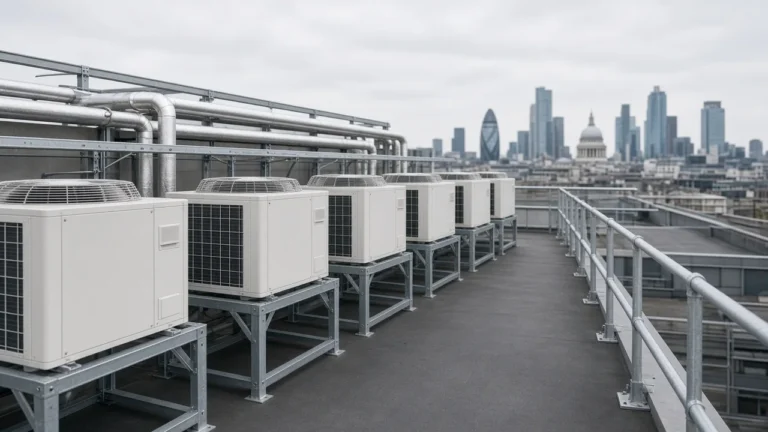
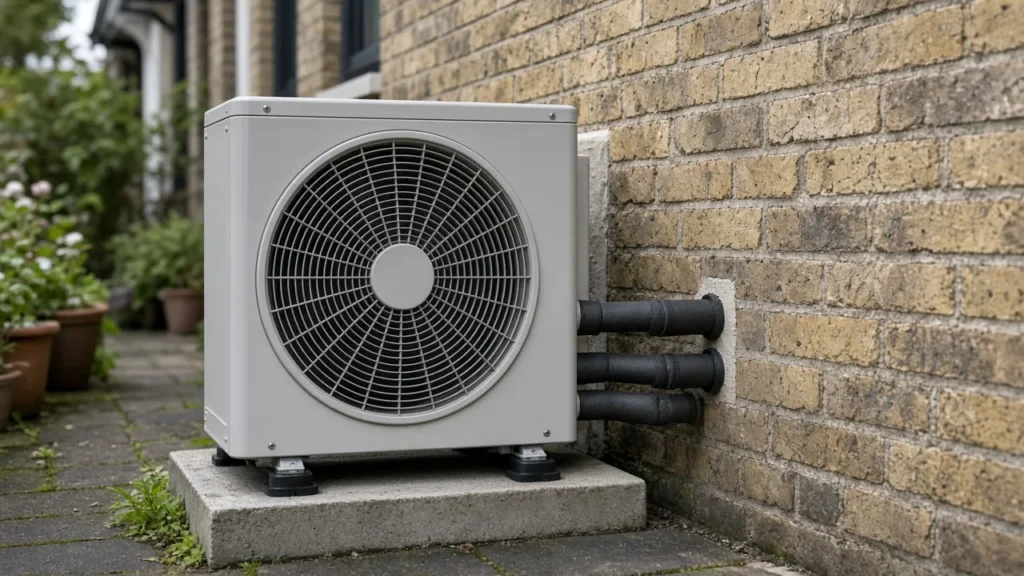
- Outdoor unit position. London gardens, side returns and flat roofs are tight. Noise at neighbours’ windows, planning in conservation areas and access for maintenance all need checking before the unit is ordered.
- Hot water and space. A cylinder needs space that a combination boiler never did. In flats and small houses, finding that space can be the hardest part of the job.
- Commissioning. Flow temperatures, weather compensation and controls are where performance is won or lost.
For a wider look at low-carbon heating in existing buildings, see our refurbishment MEP page. Our residential sector page covers houses and apartment buildings in more detail.
Our view
Record demand shows that heat pumps have moved into the mainstream in England. The risk is that installation quality fails to keep pace. Whether or not a project uses the grant, a properly designed and commissioned system is what keeps running costs down.
We handle air source heat pump installation in London and the Home Counties, from single houses to commercial plant. For larger buildings, see our HVAC installation in London services.